
Borges: Shakespeare’s Memory
Memory and Literature

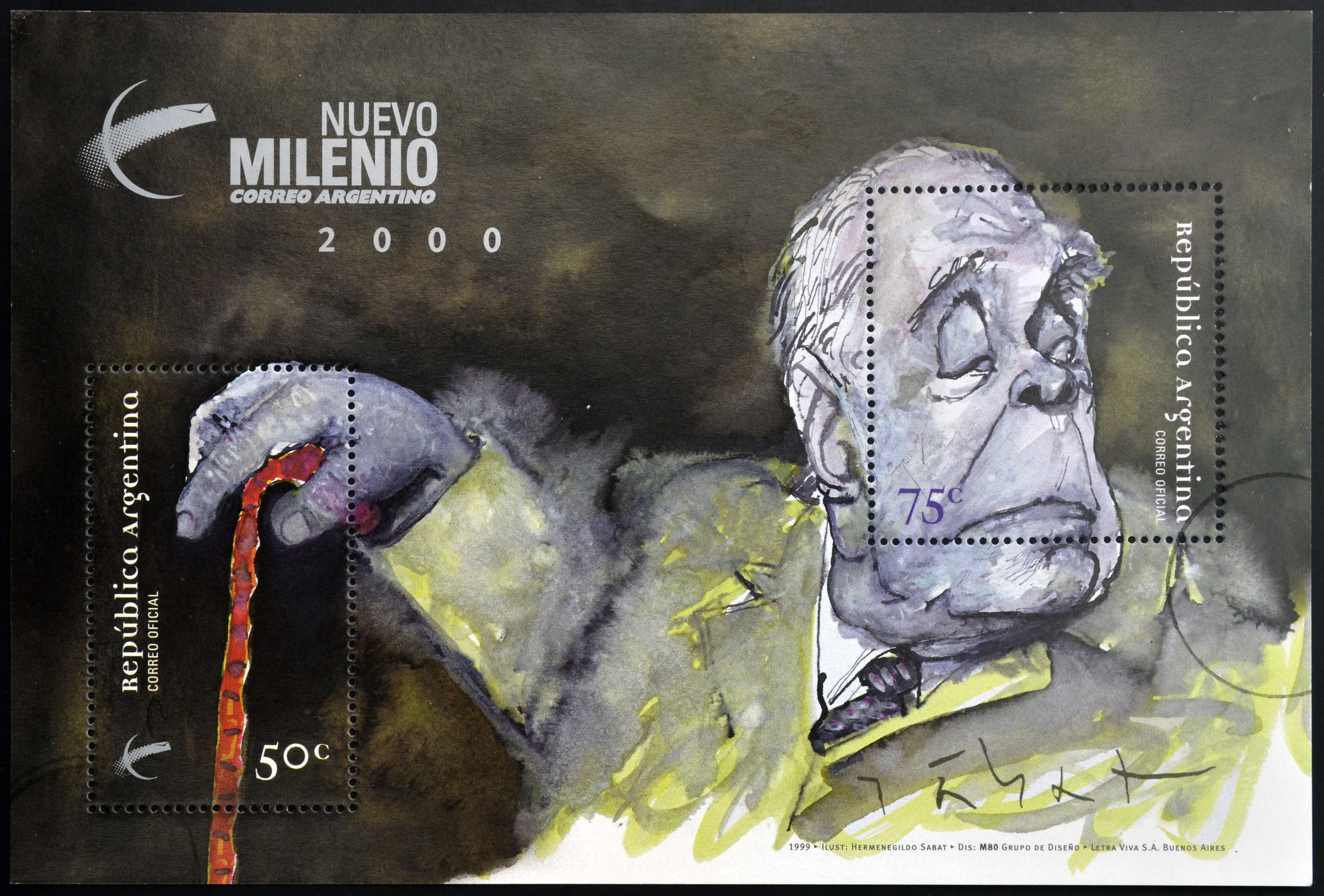
Andrew Hurley’s translation of Borges’s story “Shakespeare’s Memory” was published in 1998 in The New Yorker, though the story was originally written in Spanish in 1983. (the New Yorker version is here; you can also listen to it being read on YouTube).
The story is about a Shakespeare scholar, Hermann Sörgel, who is given a dubious gift: Shakespeare’s memory from his childhood until 1616. Sörgel accepts the gift eagerly, even though the person who gives it to him, Daniel Thorpe, warns him that it isn’t straightforwardly beneficial. “Had I not spent a lifetime, colorless yet strange, in pursuit of Shakespeare? Was it not fair that at the end of my labors I find him? Sörgel asks the reader.
I would possess Shakespeare, and possess him as no one had every possessed anyone before—not in love, or friendship, or even hatred. I, in some way, would be Shakespeare. Not that I would write the tragedies or the intricate sonnets, but I would recall the instant at which the witches (who are also the Fates) had been revealed to me, or the instant at which I had been given the vast lines
And shake the yoke of inauspicious stars
From this world-weary flesh
He imagines that he would know Anne Hathaway the way he remembers his first sexual partner (whom he cannot remember). After he accepts, he finds that what he has is nothing but the ordinary memory of an ordinary man who lived in the 16th century.
Sörgel says that he was surprised to find that Shakespeare’s memories were rather banal: he hears himself whistling a tune he didn’t know that he knew; unknown rooms and faces enter his dreams, including one of Shakespeare’s neighbors who does not play any role in the plays or the sonnets. At one point he finds that he doesn’t recognize the hulking machines of iron and steel driving down a street in Bremen.
Readers might be reminded of John Locke’s thought experiment, in which a prince and a cobbler switch memories, so that to outward observers the prince remains the prince and the cobbler remains the cobbler, but, since the prince’s body is now inhabited by the cobbler’s memories (and vice versa), the prince is “to himself the cobbler”. Personal identity is judged from the subjective perspective, Locke argues, while judgments about “same man” are made from the outside.
Sörgel says that he is now two people: himself and Shakespeare, with both memories. Sometimes they stay distinct, but other times they mix, and Sörgel does not necessarily know which are his and which are Shakespeare’s:
Throughout the first stage of this adventure I felt the joy of being Shakespeare; throughout the last, terror and oppression. At first the waters of the two memories did not mix; in time, the great torrent of Shakespeare threatened to flood my own modest stream—and very nearly did so. I noted with some nervousness that I was gradually forgetting the language of my parents. Since personal identity is based on memory, I feared for my sanity…. As the years pass, every man is forced to bear the growing burden of his memory. I staggered beneath two (which sometimes mingled)—my own and the incommunicable other’s.
Is this a reductio ad absurdum of Locke’s claim about memory constituting personal identity? Here we have the prince and the cobbler thought experiment, but it is nightmarish. Sörgel is eager to give Shakespeare’s memory away to someone else. He doesn’t want Shakespeare’s memory.
In a lecture he gave about Shakespeare, Borges takes on theories that claim that the biographical person, William Shakespeare, didn’t write the plays and sonnets that are credited to him. Borges addresses those who claim that the real author of Shakespeare’s works was Francis Bacon (not a good enough stylist, Borges says) or Ben Johnson. While Borges presents arguments against these literary/historical theories, his point seems to be larger: that the personal identity of a biographical person is not relevant to aesthetic questions about an author and their work. Those who seek to know the details of an author’s biography are in no special position to tell us what their work means: personal identity is not relevant to judgments about the works that are made public—in Shakespeare’s case, as theater--or published for others to read.